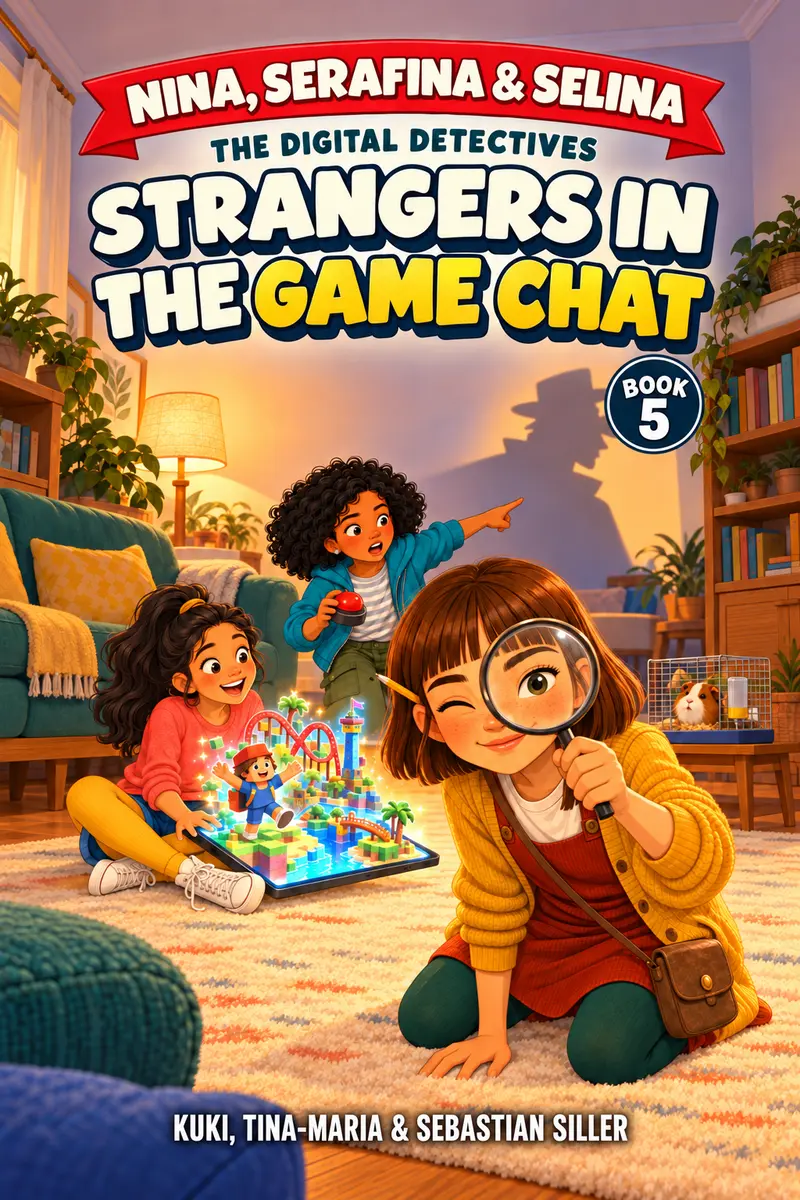
Book 5 of 11
Strangers in the Game Chat
Who’s Really on the Other Side?
ages 7–10
What the Detectives Crack
- 1Anyone can type nice things. Nice is wrapping paper, not information.
- 6Good secrets tickle. Does one weigh on your tummy? Tell a grown-up you trust.
- 10Block — Report — Tell. Getting help is the strongest move, even if something went wrong.
Show all
- 1Anyone can type nice things. Nice is wrapping paper, not information.
- 2In game chat, you don’t see who someone is — only what they type about themselves.
- 3A voice proves nothing. With one button, a grown-up can sound like a kid.
- 4Someone new in the game? Ask yourself: What does this person want from me?
- 5Someone you only know online wants to chat somewhere else? They want nobody reading along.
- 6Good secrets tickle. Does one weigh on your tummy? Tell a grown-up you trust.
- 7Blocking is like a door — your door. Reporting protects you and the next kid.
- 8Tattling means getting someone in trouble. Reporting means keeping someone safe.
- 9Online or in the schoolyard: if a friendship has to stay secret, something’s wrong.
- 10Block — Report — Tell. Getting help is the strongest move, even if something went wrong.
Activity Sheets to Print
The kids’ sheets: free, no sign-up. The book itself is available on Amazon.
- TestComing soon
- Activity PagesComing soon
- Pocket CardComing soon
- Remember PosterComing soon
- Teacher SheetComing soon
- Class SetComing soon
Want the sheets for the next book automatically? Get the parents’ post — optional, unsubscribe any time. Parents' post